A Lawrence Township Restoration Call, Start to Finish
When a property loss happens in Lawrence Township, the workflow is the same as anywhere else our Trenton crew dispatches. You call, a real human answers — no automated phone tree, no after-hours service that takes a message and hangs up. We get the address, the loss type, and any building access notes (gate codes, building management contacts, COI requirements) on that first call so the truck rolls toward your address with the right equipment for what we are walking into.
Active emergency response — water actively intruding, fire just extinguished, sewage actively backing up — runs to a sub-hour on-site target across our service area. The drive from our Trenton location to Lawrence Township is approximately 4 miles. Normal-traffic estimate: 12-20 minutes door-to-door. Pre-staged equipment during surge windows (winter freezes, named storms) keeps that arrival time consistent even on high-volume days.
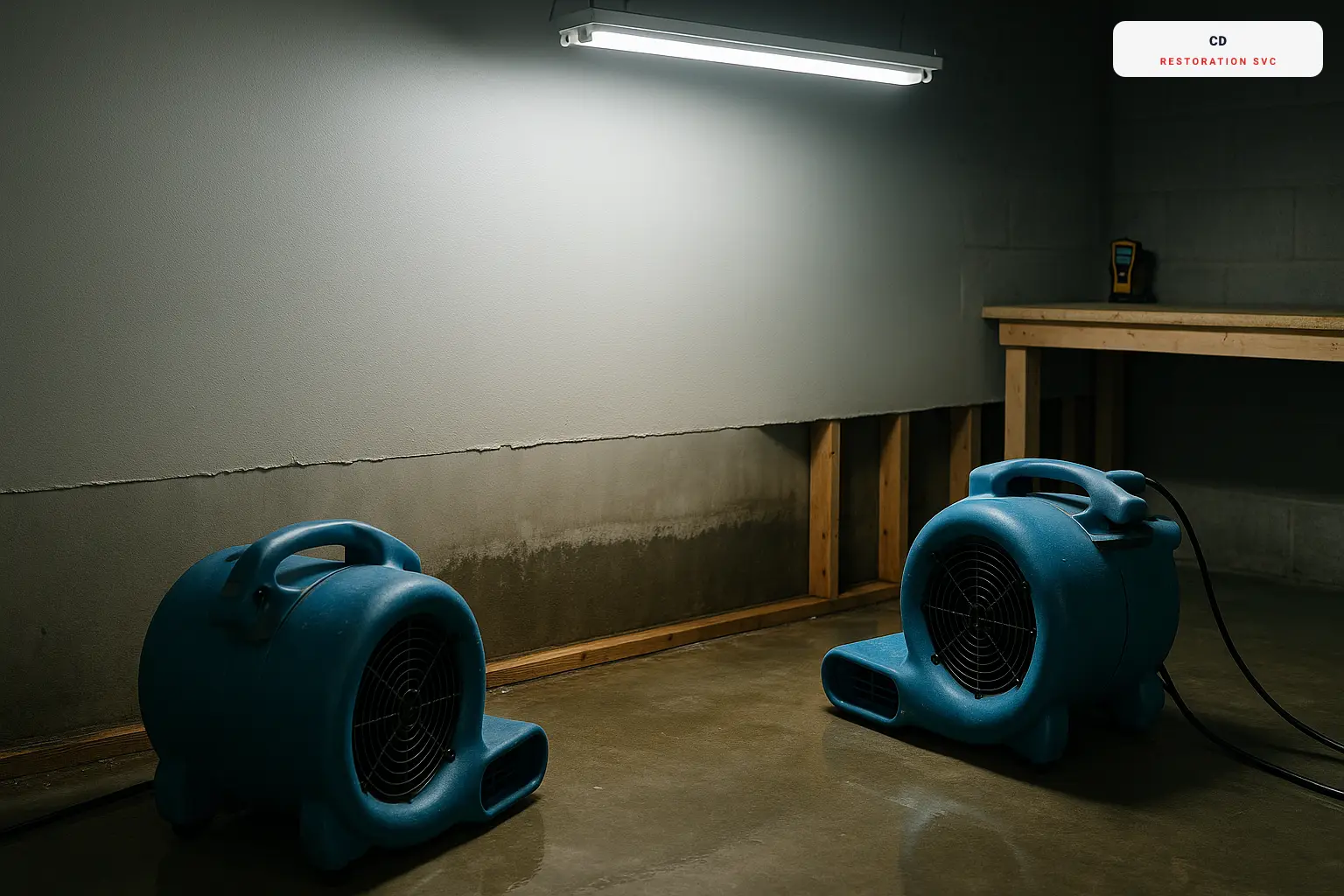
On-site protocol runs the same on every job: stop the source first, then document, then deploy equipment. Source-control means water off at the supply, electrical isolated where wet, Cat-3 areas contained. Documentation means photos of every wet surface and moisture readings of every substrate before equipment goes down. Equipment means air movers and dehumidifiers sized to the affected square footage. Daily monitoring visits log progress until each substrate hits dry-standard. Same crew handles the rebuild on the back end.
How carrier paperwork gets handled in Lawrence Township
The carrier paperwork on a Lawrence Township loss starts at hour one and continues through final invoice. Daily moisture logs mapped to a building diagram, before/during/after photos of every affected surface, an Xactimate-format scope for both mitigation and reconstruction. Carrier-approved adjusters get a complete file rather than a series of follow-up requests. The cause-of-loss framing is the single most important document because it dictates which policy bucket pays and at what limits.